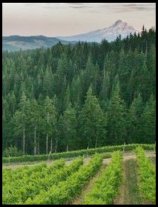
 Oregon's northern latitude
brings long hours of summer sunshine to its more than 33,000
vineyard acres, allowing a
wide variety of wine grapes to grow
throughout the many winegrowing regions of the state. In the
western part of
Oregon, occasional marine breezes breach the Coastal
range and help moderate the climate in inland valleys, causing the
ripening process for wine grapes to be gradual. The
combination of these conditions encourages complex fruit flavors,
aromatics and nuances in Oregon-grown wines and complexities that
allow Oregon wineries to compete well with other world-class
wineries.
Oregon's northern latitude
brings long hours of summer sunshine to its more than 33,000
vineyard acres, allowing a
wide variety of wine grapes to grow
throughout the many winegrowing regions of the state. In the
western part of
Oregon, occasional marine breezes breach the Coastal
range and help moderate the climate in inland valleys, causing the
ripening process for wine grapes to be gradual. The
combination of these conditions encourages complex fruit flavors,
aromatics and nuances in Oregon-grown wines and complexities that
allow Oregon wineries to compete well with other world-class
wineries.
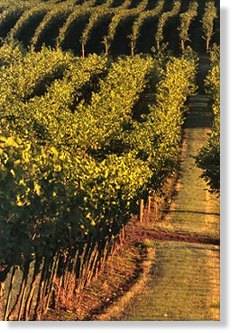
Oregon wineries are generally small and decentralized. Most are
located in valleys between the Cascade Mountains (stretching the
entire length of the state) to the east and Oregon's Coastal Range
to the west.

TIP: If you plan on visiting West Coast wineries in
Washington, Oregon or California any time in the next 12 months, be sure to
get your Priority Wine Pass
first. It's good for a full year of
complimentary or 2-for-1 tastings
─ along with other VIP membership benefits
─
at
hundreds of premium wineries.
WinesNorthwest users get a
$20.00 discount off an annual $59.99 membership. |
As their numbers grow,
however, wineries throughout Oregon's various wine-growing regions are
tending to choose locations near established wineries, making it more
attractive and convenient than ever for visitors to stop in at
multiple wineries each touring day. An even newer trend
sees wineries opening satellite tasting rooms in towns along
primary wine-touring routes, expanding the number of tasting and
buying opportunities within these small towns and creating what many call
wine towns. Lodging and
dining
opportunities are also expanding to cater to the tastes and
needs of wine-country travelers.
Choose a Region
The northwest portion of Oregon wine country is celebrated for its
cool-climate grape varieties, including Pinot Gris, Riesling,
Chardonnay, and especially Pinot noir. The
Southern
 Oregon appellation (AVA) starts south of Eugene and
includes the Umpqua Valley AVA,
the Red Hill Douglas County AVA,
the Elkton Oregon AVA, the
Applegate Valley AVA and the
Rogue Valley AVA, all of which are
located west of the Cascades and east of the Coast Range. Oregon appellation (AVA) starts south of Eugene and
includes the Umpqua Valley AVA,
the Red Hill Douglas County AVA,
the Elkton Oregon AVA, the
Applegate Valley AVA and the
Rogue Valley AVA, all of which are
located west of the Cascades and east of the Coast Range.
The regions of
Southern Oregon, along with the eastern portion of the
Columbia Gorge
AVA,
are generally much warmer and significantly drier than those of the
northwestern quadrant of Oregon State where the pinot noir vineyards
of the
Willamette Valley AVA thrive.
It wasn't until early 2005
that the significantly warmer terroir of southwest Oregon was given
its due for its distinctly different wine growing area, and the
federally authorized
Southern Oregon American Viticultural Area was established
with its boundaries set to encompass the previously authorized
regions of the Umpqua, the Applegate and the Rogue valleys.
Southern Oregon
offers a rich variety of "micro climates" as does the eastern
portion of the Columbia Gorge AVA. The breadth of terroir
types in these regions makes it possible to grow a wide variety of
grapes sometimes within only miles of each other. Distinctive
vineyard locations in these areas are capable of nurturing
high-quality Bordeaux and Rhone grape varieties, as well as French
Burgundian varieties such as Pinot noir and Chardonnay.
Note: The
Columbia Gorge AVA straddles the Columbia River and
includes portions of both the Oregon and Washington State.
The area was authorized as an official American Viticultural
Area (AVA) for both states in June 2004.
See the most recent map of Oregon AVAs from Oregon Wine Center
The
Willamette Valley AVA/appellation is Oregon's largest wine
region, stretching from Portland in northern Oregon to Eugene, more
than 100 miles. Most of the region's wineries are located west
of Interstate 5. The largest concentration of Oregon
wineries is located in the Northern portion of this region.
|
|
When the Willamette Valley AVA was first authorized 1984, its
geographic description included some 3.3 million acres! Twenty
years later, winemakers and wine growers succeeded in submitting
applications for approval of six sub appellations within the
Willamette Valley, sub appellations that include micro climates proven
over the years to be distinct from the Willamette Valley as a whole,
and suited for the growing of various wine grapes.
McMinnville Foothills,
Dundee Hills,
Ribbon Ridge and
Yamhill-Carlton
were all authorized as official American Viticultural Areas (AVA) in
the first quarter of 2005; the
Eola-Amity Hills AVA was authorized later that year in
August, and the
Chehalem Mountains
AVA became official on December 27, 2006.
In February 2005,
federal authorization also was passed for the
Southern Oregon AVA. It
was distinct from other recent State-AVA designations in that it
defined a macro appellation that completely encompassed
previously authorized appellations in the southwestern part of the
state. The
Umpqua Valley
(1984)
and Red Hill Douglas County
(2005)
AVAs, the Rogue Valley AVA
(1991)
and the Applegate Valley AVA (2001)
now all lie within the boundaries of the newer two-million-acre
appellation of Southern Oregon. In 2013,
Elkton Oregon AVA was
authorized; it lies entirely within the Umpqua Valley of the Southern
Oregon AVAs.
Appellations on the east side of Oregon's Cascade Mountains
include the eastern portion of the
Columbia Gorge
AVA and small, southern portions of the
of both the Columbia Valley and
Walla Walla Valley AVAs.
The Rocks
District of Milton-Freewater AVA is also on the east side of
the Cascades and lies completely within the
Oregon portion of the Walla Walla Valley AVA.
If you plan to drive
from western to eastern Oregon, you might want to use Interstate 84,
which uses the sea-level path of the Columbia River to traverse the
Cascades along the northern edge of the state. Using this
route, you'll drive through the spectacular
Columbia Gorge
wine region where you'll find
wineries to visit on both the Oregon and the Washington side of the
Columbia River. On the east side of the state, you'll
find a few more wineries to
visit outside official state
appellations in the Bend, Mt Vernon and Le Grande areas.
Touring Oregon Wine Regions
The map and links below allow
you to explore the wineries of each wine region within Oregon, as
well as a few outside
official appellations. You will
also find details about nearby lodging and dining in each region,
special events and touring opportunities.
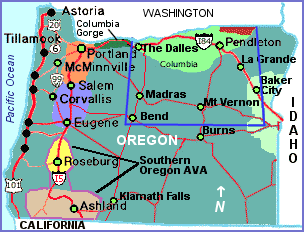
Click on the Oregon region of your choice.





Appellations Shared with Washington



Appellation Shared with Idaho

|
TIP: If you plan on visiting West Coast wineries in
Washington, Oregon or California any time in the next 12 months, be sure to
get your Priority Wine Pass
first. It's good for a full year of
complimentary or 2-for-1 tastings
─ along with other VIP membership benefits
─
at
hundreds of premium wineries.
WinesNorthwest users get a
$20.00 discount off an annual $59.99 membership. |
|
Oregon wine varieties & still
wines info:
Burgundian and
Alsatian varieties such as:
Pinot noir,
Chardonnay, Riesling,
Pinot gris, Pinot blanc
and Gewürztraminer
Bordeaux & Rhone varieties
(grown mostly in Southern Oregon):
Albariño,
Cabernet Sauvignon, Merlot, Syrah,
Sauvignon blanc, Tempranillo
Other wine styles:
Sparkling wines, Red blends, White blends,
Rosé & Blush blends,
Port wines, late-harvest wines,
ice wines and
fortified dessert wines |


Copyright © 1997 -
April, 2020 Susan R. O'Hara.
All rights reserved.
Last revised:
04/24/2020
|
Oregon Wine
Facts
Number of Wineries
2018 - 770+
2015 - 702
2013 - 544
2012 - 500+
2011 - 419
2010 - 400
2008 - 350+
2005 - 303
2003 - 250
2001 - 174
2000 - 135
1990 -
71
1986 - 47
1980 - 34
1976 - 11
1970 - 5
-
Vinifera Acreage
Planted
2017 - 33,631
2015 - 28,034
2014 - 27,309
2013 - 23,955
2011 - 20,000
2009 - 19,600
2008 - 19,300
2007 - 17,400
2006 - 15,600
2005 - 14,100
2003 - 13,400
2002 -
12,100
2001 - 11,100
2000 - 10,500
1999 - 9,800
1991 - 5,950
1990 - 5,682
1980 - 1,100
1972 - 200
1968 - 100
(1st planting of
Southern
Oregon
vinifera grapes
in 1959)
Wine
Sales
2018 (as of 8/11/18)
3.9 million cases
2016 Sales
3.4 million cases
2014 Sales
3.0 million cases
2013 Sales
2.8 million cases
2010 Sales
1.9 million cases
2009 Sales
1,660,202 - cases
2008 Sales
1,748,282 - cases
2007 Sales
1,711,532 cases
2006 Sales
1,590,357 cases
2003 Sales
1,199,086 cases
2001 Sales
1,000,000+ cases
1999 Sales
777,890 cases
1994 Sales
612,512
cases
72 varieties of wine grapes
are grown in Oregon State
Major Varieties
Pinot noir, Pinot gris,
Chardonnay, Syrah,
Cabernet sauvignon, Riesling, Merlot, Tempranillo,
Pinot blanc,
Viognier,
Cabernet franc, Malbec,
Gewürztraminer,
Sauvignon blanc, Müller Thurgau
Additional Varieties
Arneis, Baco noir,
Chenin blanc, Dolcetto, Gamay noir, Grenache, Malbec,
Maréchal Foch,
Muscat, Nebbiolo, Petite
Petit
Verdot, Sangiovese, Semillon, Zinfandel
Ratio of Red to White 2017
production:
67% / 33%
2016 Wine Industry
Economic Impact
The sum of all Oregon's economic activity related
directly or indirectly to wine is more than $5.61 billion.
OFFICIAL
AMERICAN
VITICULTURAL AREAS OF OREGON
Willamette
Valley AVA
(1983)
Sub Appellations of the
Willamette Valley AVA
Dundee Hills
(2005)
McMinnville Foothills
(2005)
Ribbon Ridge
(2005)
Yamhill-Carlton
(2005)
Eola-Amity Hills
(2005)
Chehalem Mountains
(2006)
Southern
Oregon AVA
(2005)
Sub Appellations
of Southern OR AVA
Applegate Valley
(2001)
Elkton Oregon
(2013)
Red Hill Douglas County
(2005)
Rogue Valley
(1990)
Umpqua Valley
(1984)
Shared with
Washington State
Columbia
Gorge AVA
Columbia Valley AVA
Walla Walla Valley
AVA
Sub Appellation
of the Walla Walla AVA but
entirely within Oregon:
The Rocks District of
Milton-Freewater AVA
Shared with Idaho
Snake River Valley
|